


Bernina Industrial Equipment in High-End Garment Factories: Precision Sewing Process Standards
Bernina Industrial Equipment in High-End Garment Factories: Precision Sewing Process Standards
For garment factories producing luxury apparel, haute couture, and high-end ready-to-wear, stitch quality is not just a metric—it is the difference between a garment that commands premium pricing and one that ends up on the clearance rack. Bernina, the Swiss manufacturer that has been producing sewing machines since 1893, occupies a unique position in this market. While not a traditional multi-head industrial manufacturer like Juki or Brother, Bernina's industrial and semi-industrial machines are prized in high-end production environments where precision, stitch quality, and Swiss engineering matter more than raw speed. This guide examines Bernina's industrial equipment offerings, precision sewing standards, and their role in luxury garment manufacturing.
Outline
1. What Distinguishes Bernina from Traditional Industrial Sewing Machine Manufacturers?
Bernina is fundamentally different from Juki, Brother, or Jack. While those brands dominate high-volume production lines with machines operating at 5,000–7,000 stitches per minute, Bernina's heritage is Swiss precision engineering for quality-driven applications. Bernina machines are developed, designed, prototyped, and tested at the company's headquarters in Steckborn, Switzerland, with a philosophy that prioritizes stitch quality, durability, and precision over maximum speed. The Bernina 950 Industrial, for example, is described as "practical and versatile" with "maximum precision and top stitch quality for professional high-speed sewing"—but its maximum speed is approximately 1,450 RPM, significantly slower than true industrial machines. This trade-off is intentional: Bernina machines are built for applications where every stitch must be flawless.
2. Which Bernina Models Are Actually Used in Professional Garment Production?
Bernina offers several models that bridge the gap between home sewing and industrial production. The Bernina 950 Industrial is a mechanical machine with over 21 practical and decorative stitches, automatic buttonholes, a built-in knee-lever-operated presser foot lifter, and compatibility with a heavy-duty industrial frame. It comes with seven presser feet for zigzag sewing, darning, buttonholes, embroidering, serging, blindstitch, and zippers. The bernette 08 Straight Stitch operates at 1,600 stitches per minute with a powerful DC motor and an extra-large bobbin holding 40% more thread. The Bernina 735 Pro is a large sewing machine with professional-level stitch control, a 5.5mm maximum stitch width, free arm for fine fabrics, Adaptive Thread Tension, Pinpoint Laser technology, and 1,753 built-in stitches. The Bernina 830 is a flagship model with a 15-inch free arm, 12 inches of space to the right of the needle, BERNINA Stitch Regulator (BSR) for consistent free-motion stitching, and a jumbo bobbin with 40% more thread capacity. These machines are used in professional sewing workshops, sample rooms, and high-end production environments.
3. What Precision Sewing Technologies Define Bernina's Industrial Offerings?
Bernina's precision advantages are built on proprietary technologies. The BERNINA Stitch Regulator (BSR) enables stitches of exactly the same length in straight stitch or zigzag during free-motion sewing, ensuring consistent stitch quality regardless of sewing speed. Adaptive Thread Tension reads the stitch and fabric type and adjusts thread tension continuously, keeping results on both sides of the fabric consistently beautiful. BERNINA Dual Feed (BDF) feeds material from both the top and bottom simultaneously, preventing layer shifting on delicate or multi-layer fabrics. The Pinpoint Laser provides precise needle placement on fine and challenging fabrics. The jumbo bobbin system holds 40% more thread than standard bobbins, reducing downtime for bobbin changes. These technologies are designed for applications where stitch precision cannot be compromised.
4. What Are the Critical Process Parameters for Bernina Machines in High-End Production?
Bernina machines are factory-set with specific tension parameters. Bernina sets upper thread tension to optimal values using Mettler Metrosene/Serlon thread, size 100/2. For the Bernina 950 Industrial, stitch selection is via two control levers located at the top of the machine, with automatic buttonhole settings adjustable between five different options. The machine's universal feed dog ensures consistently high stitch quality across materials ranging from delicate to coarse fabrics. For the Bernina 735 Pro, maximum stitch width is 5.5mm—narrower than the 9mm found on some models, but specifically chosen for fine fabric work where precision matters more than width. The 735 Pro sews at up to 1,000 stitches per minute with a high-speed hook system. For the bernette 08, the 1,600 SPM speed makes it one of the fastest domestic-class machines available. These parameters are not interchangeable with standard industrial settings—they reflect Bernina's focus on quality over quantity.
5. Which Garment Types and Production Scenarios Are Best Suited to Bernina Equipment?
Bernina machines excel in specific production scenarios. Sample rooms and prototyping: The precision and stitch quality of Bernina machines make them ideal for creating samples that must perfectly represent the final product. High-end tailoring and couture: Garment makers working with fine fabrics like silk, chiffon, and georgette benefit from the 5.5mm precision and Adaptive Thread Tension of the 735 Pro. Luxury denim and heavy fabrics: The Bernina 950 Industrial is used by professional sewers for denim jeans and heavy fabrics. Buttonhole-intensive production: The automatic buttonhole function with five different settings handles materials from delicate to heavy. Quilted and padded garments: The BSR functionality ensures consistent stitch length in free-motion quilting. One professional user reports using a Bernina 950 Industrial for over 40 years for both professional and personal work. Bernina machines are not designed for high-volume, 500-piece-per-day production lines—they are designed for applications where every stitch must be perfect.
6. What Are Bernina's Quality Certifications and Manufacturing Standards?
Bernina's quality credentials are deeply embedded in its manufacturing process. All Bernina sewing machines are developed, designed, prepared as prototypes, and tested at the plant in Steckborn, Switzerland. The close collaboration between engineers, testers, and mechanics in prototype construction is "fundamental to the quality of BERNINA products". Bernina products are manufactured exclusively with high-quality materials "inside and out". The company's philosophy is that "perfect work is only possible with patience and discipline," and employees "are committed to ensuring that the machines and computers are precisely manufactured down to the last detail". To meet these quality standards, Bernina uses "the most advanced technology available". Many Bernina models come with extended warranties—the Bernina 735 Pro offers a full 7-year warranty—reflecting the company's confidence in its manufacturing quality.
7. How Do Bernina Industrial Machines Compare to True High-Volume Industrial Equipment?
The comparison reveals fundamental differences in design philosophy. True industrial machines from Juki, Brother, and Jack operate at 4,000–7,000 stitches per minute, are built for 8–16 hour continuous shifts, use direct-drive servo motors for energy efficiency, and are task-specialized (lockstitch, overlock, coverstitch). Bernina industrial and semi-industrial machines operate at 1,000–1,600 stitches per minute (approximately one-quarter to one-third the speed), are built for professional workshops rather than 24/7 factory floors, offer extensive stitch libraries (1,753 stitches on the 735 Pro), are designed for versatility across multiple applications, and deliver precision stitch quality that mass-production machines cannot match. Bernina machines are not replacements for industrial workhorses—they are complementary tools for precision operations that cannot be automated or rushed.
8. What Are the Total Cost of Ownership Considerations for Bernina in Factory Settings?
Bernina machines command premium pricing. The Bernina 735 Pro is priced at approximately £3,495—significantly higher than entry-level industrial lockstitch machines. The 950 Industrial, while no longer in production, remains available on the secondary market with "sensible" used prices. However, total cost of ownership must account for: lower speed (fewer stitches per hour, limiting throughput); lower maintenance requirements (Swiss engineering and quality materials reduce breakdown frequency); precision advantages (reduced rework from stitch defects); warranty coverage (7-year warranty on the 735 Pro); and resale value (Bernina machines hold value exceptionally well). For factories producing high-end garments where rework costs are high and stitch quality directly impacts brand perception, the premium price may be justified. For high-volume commodity production, the math does not work.
9. What Is the Role of Bernina in a Mixed-Equipment Factory Environment?
Many high-end garment factories operate mixed equipment fleets. A typical configuration might include: Juki or Brother lockstitch machines for high-volume straight stitching on standard seams; Bernina 735 Pro or 830 machines for precision operations on fine or challenging fabrics; Bernina 950 Industrial machines for heavy fabrics and buttonhole-intensive work; and overlock machines from dedicated manufacturers for edge finishing. This hybrid approach leverages the speed and durability of traditional industrial machines for 80% of production while deploying Bernina's precision for the 20% of operations where stitch quality determines product value. One industry source notes that the Bernina 950 Industrial has been used professionally for over 40 years, demonstrating the longevity that justifies the premium investment.
10. What Is the Bottom Line — Should a Garment Factory Invest in Bernina Equipment?
The answer depends on the factory's market positioning and production requirements. For factories producing luxury apparel, haute couture, sample collections for premium brands, garments requiring extensive fine-fabric work (silk, chiffon, georgette), or products where stitch perfection is a competitive advantage, Bernina machines are a worthwhile investment. The Swiss precision, Adaptive Thread Tension, BSR technology, and extensive stitch libraries deliver results that mass-production machines cannot replicate. For factories producing high-volume commodity garments where speed and low cost-per-stitch are the primary drivers, Bernina's slower speeds and premium pricing make it an impractical choice. The smartest approach for most factories is to maintain a core fleet of high-speed industrial machines from Juki, Brother, or DOIT Group for volume production, supplemented by one or two Bernina machines for precision operations, sample rooms, and prototyping. This balanced strategy maximizes both throughput and quality—the two pillars of profitable garment manufacturing.
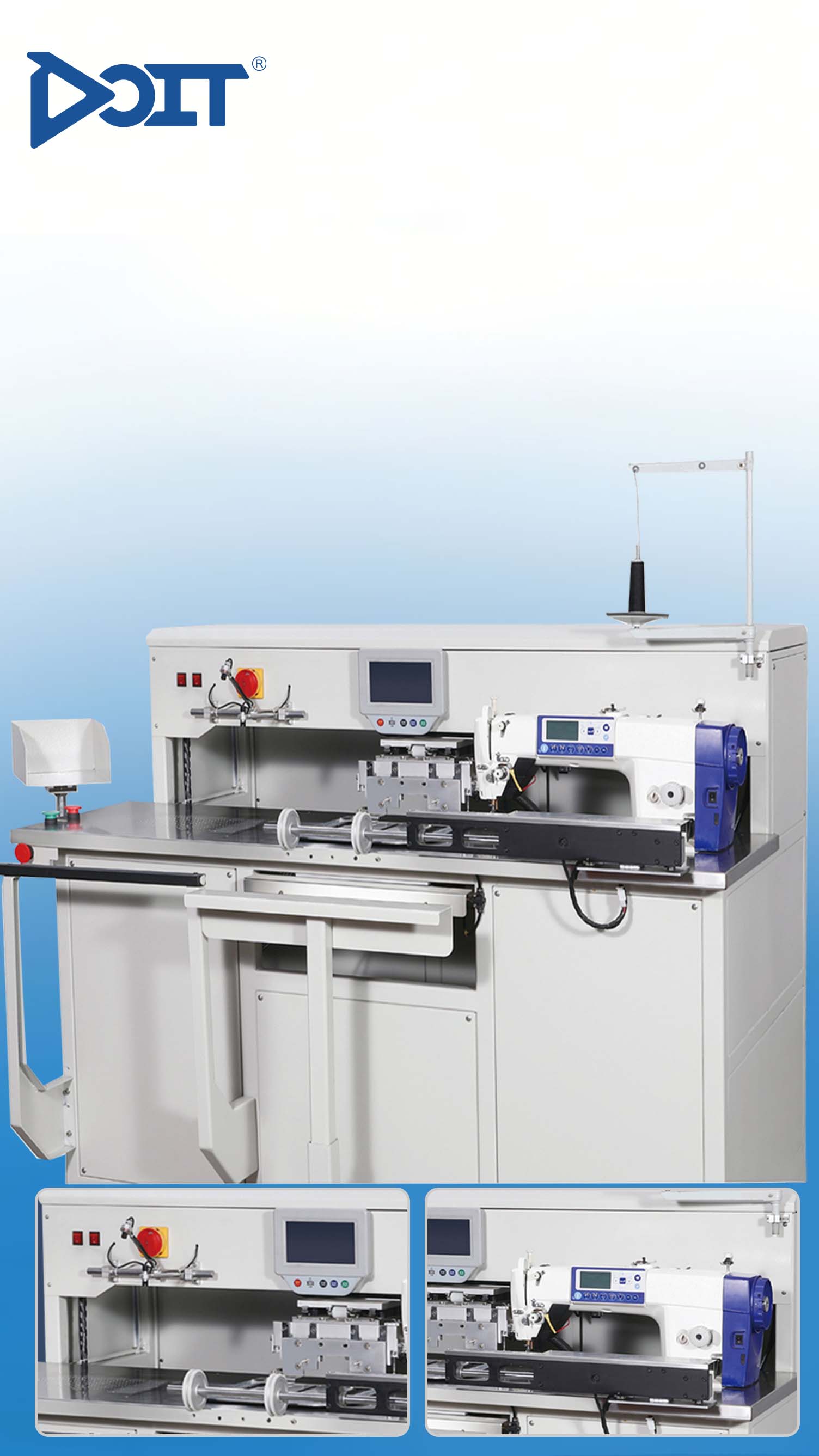
Ready to evaluate the right equipment mix for your factory? Explore DOIT Group's full range of high-speed industrial lockstitch, overlock, and specialty machines at denimsewing.com—built for the production volumes that Bernina machines complement, not replace.
📩 Email: sales6@chinadoit.cn
🌐 Website: denimsewing.com