


Industrial Sewing Machine Price Transparency: Wholesale/Retail/Service Fee Breakdown
Industrial Sewing Machine Price Transparency: Wholesale/Retail/Service Fee Breakdown
-
What's the ballpark price for an industrial sewing machine in 2026?
In the current global market, you can find a basic mechanical lockstitch unit starting from a wholesale range of about 300to300to800. For a solid, factory-ready direct-drive model, you're generally looking at a retail price between 1,000and1,000and3,000. High-end automation systems can quickly exceed $15,000..
-
Why does a brand's "retail price" matter differently in industrial buying?
Retail price is the starting point for negotiation, not the final destination. It is the figure you see on Amazon or a branded website. Your actual cost depends entirely on volume and negotiation skill, not list prices.
-
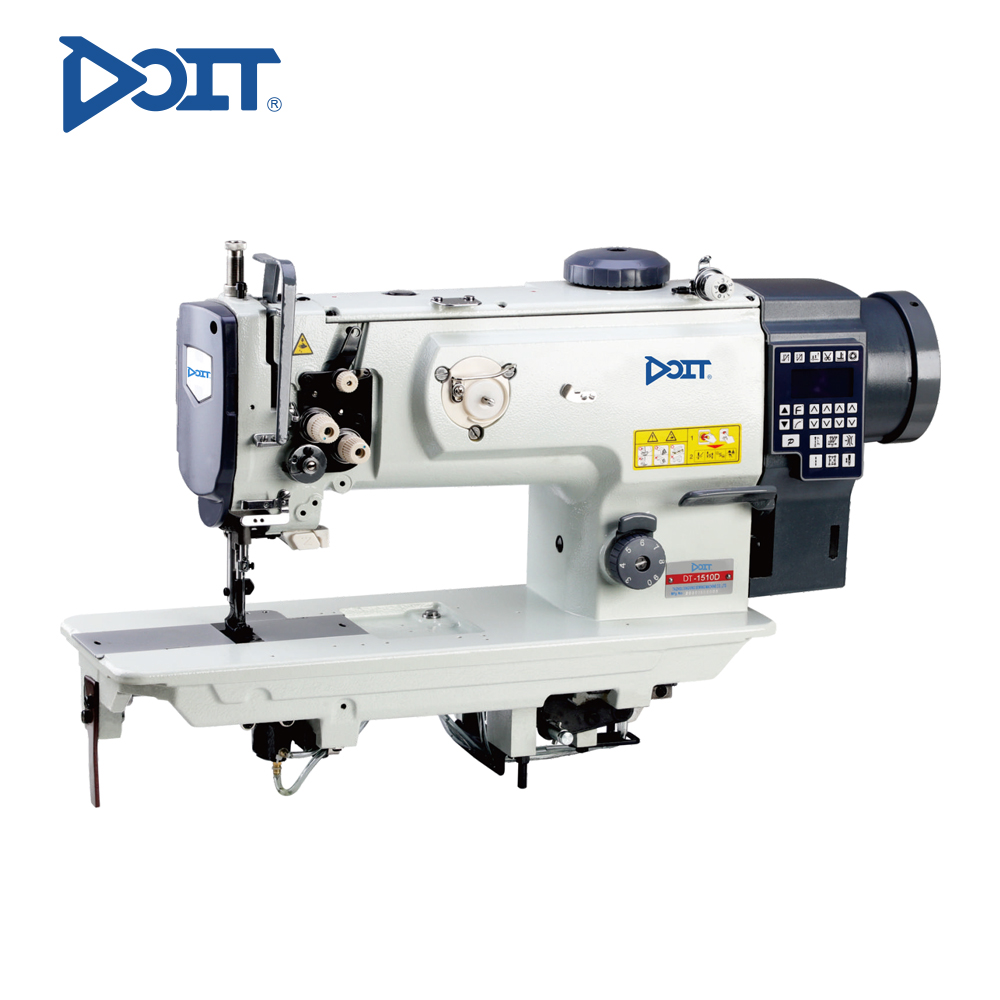
What is the actual wholesale price of a standard Chinese-made lockstitch like the DOIT 5550?
A factory-like bottom price for a standard Chinese industrial lockstitch machine (the "head" only) can be as low as 145to145to170. At this price, you are buying a mechanical product. Adding essential features like a servo motor, table stand, CE safety certification, and a longer warranty will increase the final contract price accordingly.
-
So, what is the typical wholesale price breakdown for a standard lockstitch machine?
Let's examine a standard industrial lockstitch machine from a reliable brand like DOIT. The "free on board" wholesale price could be broken down as:
-
Machine Head (base assembly): 160−160−220 (The mechanical core)
-
Direct-Drive Servo Motor: 40−40−80 (Crucial for energy savings and silence)
-
Table & Stand Kit: 25−25−50 (The workbench)
-
Shipping & Export Fees: Priced separately based on sea freight rates.
-
How does Bernina's pricing compare, and is the sticker price the full story?
Swiss brand Bernina is a price leader in the advanced home and small commercial space, not a typical industrial volume brand. An entry-level Bernina can start around a few hundred dollars. For their high-end models, the price climbs drastically: the Bernette 79 combo machine is listed at SGD 3,597[reference:4],andthetop−tierB770QEQuiltercancostupwardsof3,597[reference:4],andthetop−tierB770QEQuiltercancostupwardsof5,299. That premium buys precision and the Bernina brand community but not necessarily volume output.
-
What are the most important factors that influence the final machine price?
There is no one fixed price. Ultimately, the price is influenced by these main drivers:
-
Configuration (Core Value): Upgrading from a clutch motor to a silent, energy-saving direct-drive servo motor can save 70% on electricity.
-
Distribution Channel: Buying from a local distributor (retail) is fastest but most expensive. Importing directly from a B2B manufacturer (wholesale) takes more time but heavily cuts unit cost.
-
Unpretentious After-Sales Packages: Does the price include installation, technician training, and a 2-year parts warranty? These services have a real, negotiable value.
-
What powerful negotiation tactics work for a small garment factory?
Go in with a strategic plan, not just a lowball offer.
-
Plan a Tiered Quantity Inquiry: Never ask for the best price right away. Instead, ask the supplier for the price at Tier 1 (e.g., 10 units), Tier 2 (50 units), and Tier 3 (100 units). At Tier 3, you can see the supplier's real wholesale floor price.
-
Consolidate Your Order: Do not buy one lockstitch, one overlock, and one buttonhole machine from 3 different suppliers. The same principle applies on a smaller scale: "Don't just buy 3 machines; buy an entire production line of them from one source." Consolidating multiple machine types into a single bulk order gives you significantly more leverage.
-
Push for a 15% to 20% Discount: For quantities of around 100 units, a targeted market discount of 15% to 20% off the base price is a realistic and achievable goal .
-
What is the first hidden cost beyond the machine's price tag?
Most base prices are for the "machine head" only. You will almost certainly need to add costs for: a table and stand kit (~$50), a servo motor (if not inclusive), delivery to your port, tariff fees, and any interest from financing the purchase.
-
What is the single most expensive hidden cost after you install the machine in your factory?
The cost of unplanned downtime is your largest long-term expense. A cheap machine with poor support that breaks down for a few hours every week will cost you more in idle labor and missed deadlines than you saved upfront. Many high-volume businesses report that hidden costs like this chip away significantly at their profits.
-
Do I need a 24-month warranty, or will 12 months suffice?
Standard industry warranty on most industrial machines is one year on parts and service. A better warranty (e.g., 2 to 3 years on the motor) is a sign of manufacturer confidence and is worth negotiating for, even if it adds a small percentage to the base unit price.
-
What is the total cost of ownership for a complete 27-machine production line setup?
Besides the visible capital expense, the full budget must prepare for: installation fees (leveling tables, connecting power), technician training costs, and a monthly maintenance allocation for consumable parts like needles, bobbins, and lubricating oil. Significant initial capital is systematically demanded by industrial equipment when accurately factoring in all setup and support services.
-
Is it ever worth buying a cheap, second-hand industrial machine?
Potentially, but you are gambling. The financial risk is latent wear: a used machine running 5 years on heavy denim may fail immediately. And there is the support risk: parts for that specific old model may be unavailable, causing long, expensive downtime for the whole line.
-
How can DOIT Group help you build a transparent 5-year budget?
DOIT Group manufactures its own range of industrial lockstitch, overlock, and multi-needle machines. We can provide a clear, customized quote that breaks down the cost of the machine head + servo motor + table as one line item, and the sea freight and tax fees as separate, transparent costs.
-
Can you show me a simple total cost of ownership model for 2026?
A realistic total cost of ownership model includes these core factors: