



Mastering Heavy-Duty Materials: The Complete Guide to Needle, Thread & Tension Settings for Leather, Denim & Vinyl
In the world of industrial sewing, success isn‘t measured by how fast your machine runs—it’s measured by how consistently it produces perfect seams, shift after shift, on the toughest materials.
But here‘s the reality: the same settings that work beautifully on 6 oz. leather will fail miserably on multi-layer denim or sticky vinyl upholstery. Needle breakage. Thread shredding. Skipped stitches. Uneven feed. These are not machine failures—they’re configuration failures.
Whether you‘re sewing boot uppers, upholstery panels, or heavy denim workwear, getting the needle size, thread weight, stitch length, and pressure settings right is the difference between a profitable production line and a costly rework nightmare.
This guide delivers a material‑by‑material reference for industrial heavy‑duty sewing machines—complete with needle/thread/pressure tables, presser foot selection criteria, factory‑tested parameters, and a maintenance schedule that keeps your machines running at peak performance.
Part 1: What makes needle and thread selection the foundation of heavy‑duty sewing?
The needle is the first point of contact between your machine and the material. Get this wrong, and nothing else will work.
Needle Types by Material
| Material | Needle Type | Needle System | Key Feature |
|---|---|---|---|
| Denim / Canvas / Upholstery fabric | 135x17 (standard point) | 135x17 | Sharp round point for woven fabrics |
| Leather (all types) | 135x16 (leather point) | 135x16 | Cutting point pierces without ripping |
| Vinyl / PVC / Faux leather | 135x17 or 135x16 | 135x17 / 135x16 | Use standard or leather point; sticky materials may require larger needle |
Using a regular needle on leather will rip the material or leave oversized holes. The leather point (135x16) is specifically designed to cut through hide cleanly without tearing.
Needle Size vs. Material Thickness
| Needle Size (Singer) | Metric (Nm) | Recommended For |
|---|---|---|
| 16 | 100 | Medium denim, light canvas, soft leather |
| 18 | 110 | Upholstery fabrics, canvas, leather, PVC, vinyl |
| 19–20 | 120–125 | Heavy denim, heavy canvas, thick leather |
| 22–24 | 140–160 | Very thick leather, multiple heavy layers |
Thread Sizes & Needle Matching
In heavy‑duty industrial applications, bonded nylon or polyester thread is standard—identified by “V” followed by a number (V69, V92, V138). Matching thread size to needle size is critical. A needle that‘s too small will cause thread breakage and shredding; a needle that’s too large leaves unsightly holes.
| Thread Size (Tex) | Needle Size (Singer) | Typical Application |
|---|---|---|
| V69 (Tex 70) | 18 | Upholstery, canvas, light leather |
| V92 (Tex 90) | 19–20 | Heavy leather, luggage, outdoor gear |
| V138 | 22 | Very heavy leather, multiple thick layers |
Factory Tip: For sticky materials like vinyl, go up one needle size from the standard recommendation. The increased diameter reduces deflection and prevents thread shredding.
Recommended Thread Types
-
Bonded Polyester — Excellent UV resistance, minimal stretch, ideal for outdoor upholstery and automotive interiors
-
Bonded Nylon — Higher tensile strength, slight stretch for impact resistance, preferred for leather goods and footwear
Avoid cotton thread for heavy‑duty applications. It lacks the strength and abrasion resistance required for thick materials.
Part 2: How does presser foot selection solve the “stickiness” problem in heavy‑duty sewing?
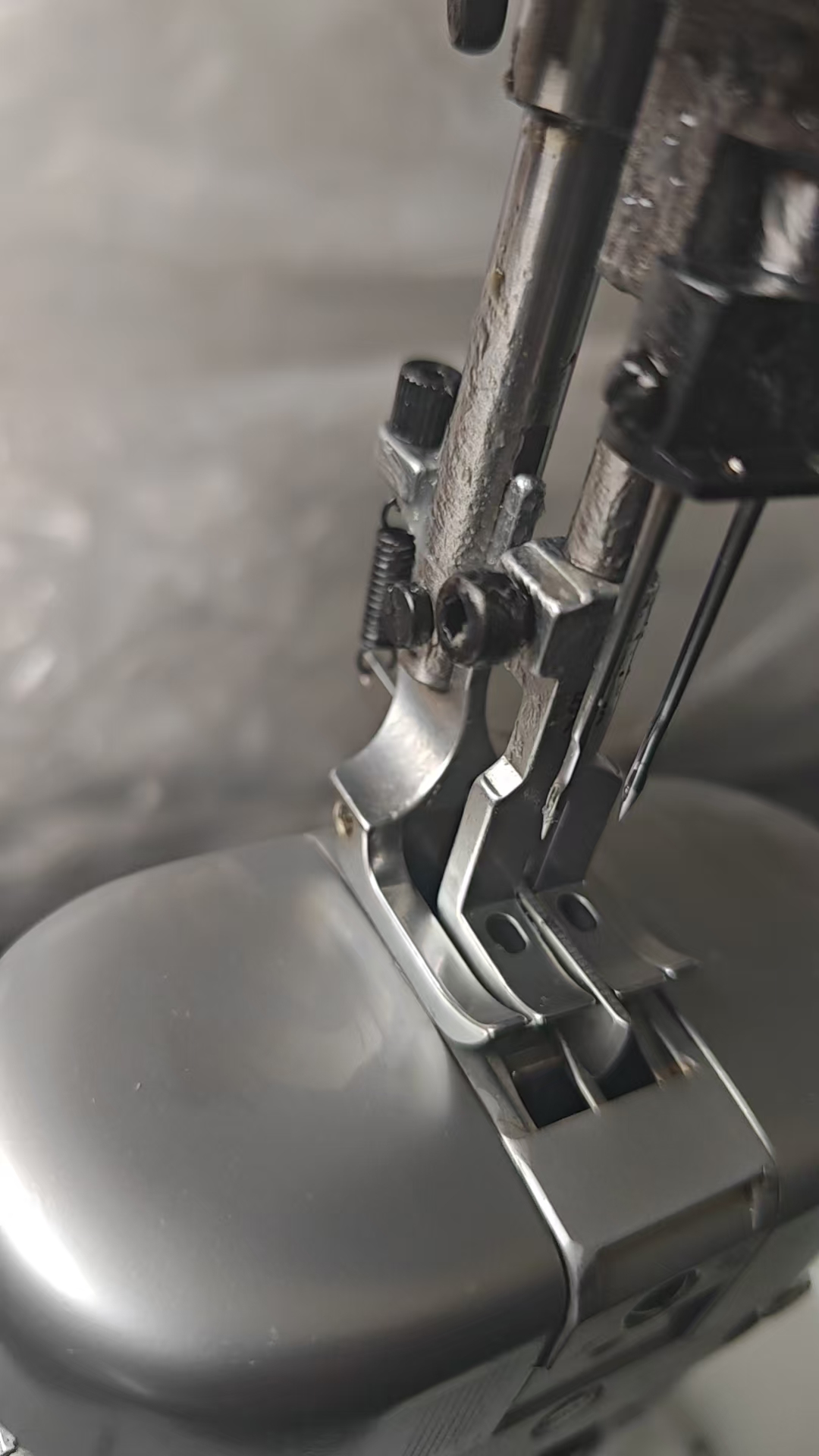
Vinyl and leather share a common challenge: their smooth surfaces stick to standard presser feet, causing uneven feeding, jamming, and frustration.
Presser Foot Options for Heavy Materials
| Presser Foot Type | Best For | How It Works |
|---|---|---|
| Walking Foot (Even Feed) | Multi‑layer denim, quilting, leather, vinyl | Top feed dogs move in sync with bottom feed dogs, preventing layer shift |
| Teflon (Non‑Stick) Foot | Leather, vinyl, faux leather | PTFE coating glides over sticky surfaces; inexpensive and effective |
| Roller Foot | Leather, vinyl | Small wheels roll over fabric, eliminating drag |
| Standard Foot | Denim, canvas (only after pressure adjustment) | Acceptable for woven heavy fabrics, but not recommended for slick materials |
Selection Quick Guide
-
Denim & canvas: Walking foot recommended for multiple layers; standard foot acceptable with increased pressure
-
Leather: Walking foot or Teflon foot—prevents marking and sticking
-
Vinyl / PVC: Roller foot or Teflon foot—the smooth surface requires minimal drag
-
Upholstery (multi‑layer foam + fabric): Walking foot is mandatory
Factory Note: For industrial production lines where quick changeover matters, consider having dedicated presser feet for each material type. The walking foot is the most versatile single investment for any shop sewing heavy materials.
Part 3: What are the factory‑tested settings for stitch length and tension parameters?
Stitch Length by Material
A longer stitch length is required for heavy materials. Short stitches weaken the material (especially leather, where perforations are permanent) and cause feeding problems.
| Material | Recommended Stitch Length (mm) | Stitches Per Inch (approx.) |
|---|---|---|
| Light denim (8–10 oz) | 2.5 – 3.0 | 8 – 10 |
| Heavy denim (12–16 oz) | 3.0 – 4.0 | 6 – 8 |
| Upholstery fabric | 3.0 – 4.0 | 6 – 8 |
| Canvas / heavy cotton | 3.5 – 4.5 | 5 – 7 |
| Soft garment leather | 3.0 – 3.5 | 7 – 8 |
| Thick leather (belt, harness) | 3.5 – 4.5 | 5 – 7 |
| Vinyl / PVC | 3.0 – 4.0 | 6 – 10 |
Critical Rule: Thicker fabric = longer stitch length. As thickness increases, the effective stitch length decreases automatically—so what you set on the dial is not always what you get in heavy stacks. Always test on the actual material stack before production.
Thread Tension Guidelines
Proper tension is achieved when the upper thread and bobbin thread lock in the middle of the material layers—not on the top or bottom surface.
Upper tension adjustments: