


Sewing Automation Upgrade Roadmap: A Phased Implementation Plan from Semi-Automatic to Fully Automatic
Sewing Automation Upgrade Roadmap: A Phased Implementation Plan from Semi-Automatic to Fully Automatic
For garment factories, the question is no longer if automation is coming — it's how fast you can adopt it. With labor costs rising, quality expectations tightening, and order lead times shrinking, sewing automation has moved from a competitive advantage to a survival necessity.
According to industry estimates, automatic sewing units and robotic deployment in the most labor-intensive stitching processes can increase production efficiency by 30% to 50%, significantly reducing delivery cycles. In fully automatic configurations, a single operator can manage 2 to 3 machines simultaneously, dramatically improving labor productivity.
This guide provides a phased roadmap for upgrading your sewing operations from semi-automatic to fully automatic systems — with stage-by-stage implementation plans, technical requirements, capacity improvement data, and investment planning frameworks.
1. Why Is Sewing Automation No Longer Optional for Garment Factories?
The garment industry is at an inflection point. Rising labor costs, shrinking skilled workforce, and demand for faster turnaround times are forcing factories to rethink their production models.
The drivers of automation:
-
Labor cost escalation: Wages in traditional manufacturing hubs have risen significantly, eroding the cost advantage of manual sewing
-
Quality inconsistency: Manual operations introduce variability that automation eliminates
-
Skill shortages: Finding and retaining skilled sewing operators is increasingly difficult
-
Shorter lead times: Buyers demand faster delivery, which manual lines cannot match
-
Competitive pressure: Factories that don't automate will be priced out of the market
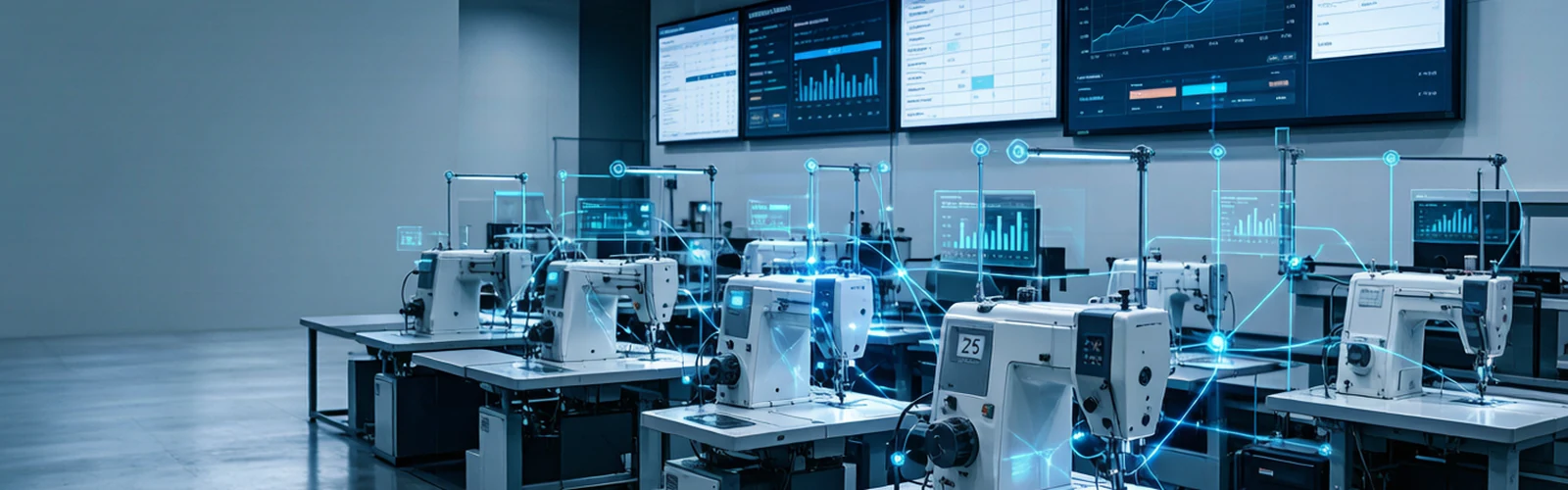
The future of garment manufacturing lies in intelligent, collaborative sewing systems that combine sewing equipment with artificial intelligence and smart manufacturing technologies. The integration of next-generation information technology with sewing machinery and production models will drive the digitalization, networking, and intelligent development of the entire sewing industry chain.
The bottom line: Factories that delay automation risk being left behind. Those that adopt it strategically will capture market share and improve margins.
2. What Is the Automation Maturity Model for Sewing Operations?
Sewing automation is not a single leap — it's a progression through distinct stages of capability.
| Stage | Description | Operator-to-Machine Ratio | Typical Efficiency Gain |
|---|---|---|---|
| Level 1: Manual | Full manual operation, single machine per operator | 1:1 | Baseline |
| Level 2: Semi-Automatic | Machines with basic automation (auto-trimmer, auto-backtack), one operator per machine | 1:1 | 15–25% |
| Level 3: Automated Workstation | Single-purpose automated machines (pocket welting, patch pocket, template sewing), one operator per machine | 1:1 | 30–50% |
| Level 4: Multi-Machine Operation | One operator managing multiple automated machines | 1:2–3 | 60–80% |
| Level 5: Fully Automated Line | Integrated automated sewing cells with minimal human intervention | 1:4+ | 100%+ |
Each stage requires different equipment, training, and investment. The key is to move systematically — not skipping stages but accelerating where the ROI is highest.
DOIT Group's automation portfolio: As a professional sewing machine manufacturer with over 10 years of experience in producing and exporting garment equipment, DOIT specializes in a comprehensive range of machines including lockstitch, interlock, overlock, and special sewing machines, as well as embroidery machines. With ISO9001 quality certification and CE & ISO compliance, DOIT machines are built for the demands of automated production.
3. Phase 1: Semi-Automatic Upgrades — The Foundation
Before moving to full automation, factories should first upgrade existing machines with semi-automatic features that deliver immediate productivity gains.
Key upgrades at this stage:
-
Direct-drive servo motors: Replace traditional clutch motors with energy-efficient servo motors that save over 60% power while improving production efficiency by more than 30%
-
Automatic thread trimmers: Eliminate manual thread cutting, saving seconds per seam — which adds up to hours per shift
-
Automatic backtack and presser foot lift: Reduce operator movements and fatigue
-
Needle positioning systems: Ensure consistent stop positions for easier fabric handling
Expected results:
-
15–25% productivity improvement
-
60–80% energy savings
-
Reduced operator fatigue and improved retention
Investment timeline: 6–12 months to retrofit existing machines
DOIT solutions for Phase 1: DOIT's direct-drive computerized lockstitch machines with stepper motors (DT C11 series) and direct-drive overlock machines with auto-trimmers (DT 840-4AT, DT 900-4AT) provide the foundation for semi-automatic upgrades. These machines feature built-in direct drive motors that save over 60% power while improving production efficiency by more than 30%.
4. Phase 2: Automated Workstations — Single-Purpose Automation
The second phase introduces specialized automated machines for specific operations. These machines handle complex sewing tasks that traditionally required skilled operators.
Key automated workstation types:
-
Automatic pocket welting machines: For suit and jacket pockets (e.g., DOIT DT 895B, a high-speed industrial sewing machine designed specifically for automatic pocket welting)
-
Automatic patch pocket setters: For jeans, shirts, and workwear pockets
-
Automatic template sewing machines: For complex stitching patterns, collars, and lapels
-
Automatic waistband and hemming machines: For trousers and jeans production
Expected results:
-
30–50% productivity improvement over manual operations
-
Consistent quality with reduced defect rates
-
Reduced reliance on skilled operators
Investment timeline: 12–24 months to identify and implement priority automated workstations
DOIT solutions for Phase 2: DOIT's automated workstation portfolio includes the DT 895B industrial computer-controlled automatic programmable pocket welting sewing machine, as well as specialized machines for waistband production (DT 1508P-D direct drive 4-needle double chain stitch, DT 1404PMD-D) and heavy-duty applications (DT 640-D4 direct drive computerized long arm synchronous feed lockstitch). DOIT's three patented technologies have enabled the development of intelligent "one-click" complete process solutions.
5. Phase 3: Multi-Machine Operation — Scaling Productivity
The third phase leverages the capabilities of automated machines by enabling a single operator to manage multiple units. This is where the true productivity gains of automation emerge.
How it works:
-
Operators load fabric into automated workstations
-
Machines run autonomously while operators prepare the next batch
-
One operator can manage 2–3 fully automatic machines simultaneously
-
Quality is consistent because machines, not operators, control the stitching
Expected results:
-
60–80% productivity improvement per operator
-
Significant labor cost reduction (one operator replaces multiple skilled workers)
-
Increased output without expanding floor space or headcount
Investment timeline: 18–36 months to scale multi-machine operation across the factory
The key insight: A single operator managing 3 automated machines can produce more than 3 operators on manual machines — with better quality and less variability.
6. Phase 4: Fully Automated Lines — The Intelligent Factory
The final phase integrates automated workstations into complete production cells or lines, with minimal human intervention beyond material loading and quality monitoring.
Characteristics of fully automated lines:
-
Integrated material handling: Automated fabric feeding and component transport
-
Real-time quality monitoring: Sensors detect defects immediately
-
Data-driven optimization: Production data informs continuous improvement
-
Flexible changeover: Quick style changes with minimal downtime
Expected results:
-
100%+ productivity improvement over manual baseline
-
Dramatically reduced labor costs
-
Consistent, high-quality output
-
Ability to compete on speed and quality, not just price
Investment timeline: 24–48 months for full implementation
7. What Are the Capacity and Efficiency Data for Automation?
Industry data demonstrates the transformative impact of sewing automation:
| Metric | Manual Baseline | Semi-Automatic | Automated Workstation | Multi-Machine Operation |
|---|---|---|---|---|
| Operator-to-machine ratio | 1:1 | 1:1 | 1:1 | 1:2–3 |
| Productivity gain | — | 15–25% | 30–50% | 60–80% |
| Defect rate reduction | — | 20–30% | 40–60% | 50–70% |
| Labor cost reduction | — | 10–20% | 30–50% | 60–75% |
| Energy savings | — | 60–80% | 60–80% | 60–80% |
Key data points:
-
Automatic sewing units can increase production efficiency by 30% to 50%
-
A single operator can manage 2 to 3 fully automatic machines
-
Automated operations can reduce labor costs by up to 90% compared to traditional production lines
-
Fully automatic machines achieve 24/7 production capacity with stable defect rates below 1.8%
8. How Should You Plan the Investment for Automation?
Automation investment should be phased to manage cash flow and minimize risk.
Phase 1 investment (Semi-Automatic Upgrades):
-
Cost per machine: $200–600 for motor retrofit; $300–800 for auto-trimmer addition
-
Payback period: 7 months – 2.5 years
-
Best for: Factories with existing machine fleets looking for quick wins
Phase 2 investment (Automated Workstations):
-
Cost per machine: $2,000–10,000+ depending on automation level
-
Payback period: 1.5 – 3 years
-
Best for: Factories with high-volume operations for specific garment types
Phase 3 investment (Multi-Machine Operation):
-
Cost per cell: $15,000–50,000+ for 2–3 machines
-
Payback period: 2–4 years
-
Best for: Factories ready to scale automation across production lines
Phase 4 investment (Fully Automated Lines):
-
Cost per line: $100,000+ for integrated automated cells
-
Payback period: 3–5 years
-
Best for: Large-scale manufacturers with high-volume, stable production
Financing strategy: Start with Phase 1 upgrades (lowest cost, quickest payback) to generate savings that fund Phase 2 investments. Use the productivity gains from each phase to finance the next.
9. What Are the Common Mistakes to Avoid in Automation Upgrades?
Mistake 1: Trying to automate everything at once
Automation is a journey, not a destination. Start with the highest-volume, most repetitive operations and expand from there.
Mistake 2: Underestimating training requirements
Automated machines require different skills than manual machines. Invest in operator training before implementation.
Mistake 3: Ignoring maintenance requirements
Automated machines have more complex components (sensors, controllers, motors). Establish preventive maintenance schedules from day one.
Mistake 4: Choosing automation for the wrong operations
Not every sewing operation is equally suited to automation. Prioritize operations with:
-
High volume (high ROI)
-
Repetitive patterns (easier to program)
-
Quality sensitivity (automation reduces defects)
Mistake 5: Failing to plan for changeover
Automated machines may have longer changeover times between styles. Build changeover time into production planning.
10. DOIT Group: Your Partner in Sewing Automation
DOIT Group, with 15 years of expertise in producing and exporting garment equipment, is positioned to support factories through every stage of the automation journey. With ISO9001 quality certification and CE & ISO compliance, DOIT machines meet international standards for safety and performance. The company specializes in manufacturing a comprehensive range of machines, including lockstitch, interlock, overlock, specialty sewing machines, and embroidery machines.
Why DOIT Group for automation upgrades:
-
Complete product portfolio: From basic lockstitch machines to specialized automated workstations, DOIT offers equipment for every stage of automation
-
Automation-ready machines: Direct-drive motors, stepper motor control, and auto-trimmer functions are built into DOIT's advanced models
-
Proven reliability: With an annual output capacity of over 250,000 sets and a 300-employee workforce, DOIT has the scale to support factories of all sizes
-
Quality assurance: Strict quality control according to ISO9001 standards, with TUV/GS/CE/UL certification for key products
-
Innovation focus: DOIT's patented technologies have enabled the development of intelligent "one-click" complete process solutions
Key DOIT automation products:
| Product | Type | Automation Level | Best For |
|---|---|---|---|
| DT 895B | Automatic pocket welting machine | Fully automatic | Suits, jackets, formal wear |
| DT 900-4AT | Direct drive overlock with stepper motor | Semi-automatic | High-speed edge finishing |
| DT C11 | Direct drive computerized lockstitch with stepper motor | Semi-automatic | Precision garment construction |
| DT 1508P-D | Direct drive 4-needle double chain stitch | Semi-automatic | Waistband production |
| DT 640-D4 | Direct drive computerized long arm synchronous feed | Semi-automatic | Heavy-duty applications |
The Bottom Line
Sewing automation is not a single project — it's a strategic transformation that requires phased implementation, careful investment planning, and the right equipment partners.
Key takeaways:
-
Start with semi-automatic upgrades (servo motors, auto-trimmers) for immediate ROI
-
Move to automated workstations for high-volume, repetitive operations
-
Scale to multi-machine operation to maximize labor productivity
-
Plan for fully automated lines as the ultimate goal
-
Choose the right equipment partner — DOIT Group offers the portfolio, quality, and support to guide your automation journey
The factories that embrace automation systematically will capture market share, improve margins, and build sustainable competitive advantages. Those that delay will struggle to compete. The choice is clear — and the time to act is now.
Ready to start your sewing automation journey? Explore DOIT Group's full range of industrial sewing machines at denimsewing.com.
📩 Email: sales6@chinadoit.cn
🌐 Website: denimsewing.com