


Industrial Sewing Machine Bobbin Case Maintenance: Stop Thread Breakage and Skipped Stitches
Industrial Sewing Machine Bobbin Case Maintenance: Stop Thread Breakage and Skipped Stitches
1. The Bobbin Case System — Why It Matters
The bobbin case is the unsung hero of every lockstitch. It houses the bobbin, meters the lower thread and holds the resistance that lets the knot form inside the fabric instead of on its surface. Get it right and stitches lock cleanly. Get it wrong and you get thread breakage, skipped stitches and inconsistent seams.
It is also the most overlooked component in daily maintenance. Operators change needles, oil moving parts and clean the lint they can see. The bobbin case sits under the needle plate, out of sight, accumulating compacted lint and thread wax, developing burrs on the thread path, and drifting out of tension — with nobody looking until something breaks.
This guide covers what to inspect, how to set tension, how to trace both thread breakage and skipped stitches back to a root cause, what the hook timing numbers should actually be, and a maintenance schedule a line can follow.
2. Wear Detection — What to Look For, When to Replace
Before you start any of this: switch the machine off and confirm the motor has stopped. Every adjustment procedure in Juki’s own engineer manuals opens with that warning, because a machine that starts unexpectedly while your hand is in the hook area does not give you a second chance.
Visual inspection criteria
|
Defect |
What to look for |
Action |
|
Scratches or burrs |
Rough, sharp or raised edges on the case or the tension spring |
Replace — see below |
|
Discolouration |
Colour change from heat or friction |
Inspect closely; replace if the surface is compromised |
|
Chips or nicks |
Missing material on case edges or spring |
Replace |
|
Uneven wear |
Asymmetric wear on the contact surfaces |
Check hook alignment; replace if severe |
|
Stickiness |
Case tacky with oil and lint |
Clean thoroughly, then re-check tension |
Why scratches are not repairable
Never keep a bobbin case that is scratched on the thread path. A scratch that catches the bobbin thread at 5,000 spm shreds it, tangles the upper thread, and can break the needle.
Note the word replace, not polish. Polishing changes the geometry of the thread path you just tried to repair, and polishing compound left behind becomes a lint magnet in the one place you cannot afford contamination. Abrasive repair is for non-thread-path surfaces only — the outside of the case, or a burr on a mounting edge. Anything the thread touches gets a new part.
The bobbin itself
Bobbins wear out too. Discard any that are cracked, warped, nicked or out of round, and any that do not spin freely in the case. A damaged bobbin produces tension you cannot tune out.
One rule that prevents a lot of mystery faults
Keep each bobbin case with its own machine. A bobbin case is lapped to the hook it was fitted with at the factory. Moving a case between machines changes the running clearance, and the resulting intermittent tension faults are among the hardest problems to trace on a floor. If you keep spares, mark them to a machine position and do not rotate them.
Inspection frequency
Wear is a function of running hours, not of the calendar. For high-volume lines running most of the week, inspect bobbin cases weekly and replace any with visible scratches or burrs immediately. Machines running occasionally can be inspected monthly.
3. Bobbin Tension — The Drop Test, and Where It Stops Being Useful
Too tight and the thread breaks or the seam puckers. Too loose and the stitch is uneven, or loops form on the underside.
Adjustment procedure
Step 1 — Clean first. Lint and bobbin wax pack under the tension spring and change the tension without the screw moving at all. Use a small brush or the edge of a business card to clear under the spring. Adjusting a dirty case is the most common wasted adjustment on a floor.
Step 2 — Remove and inspect. If you find scratches or burrs on the thread path, stop and fit a new case. Do not try to tune a damaged one.
Step 3 — Load the bobbin correctly. On the common vertical-axis hook used by Juki DDL-8700-class lockstitch machines, the bobbin sits so the thread unwinds clockwise when you pull it — hold the tail up and the bobbin should look like the letter “p”, not a “q”. The underlying principle is that the bobbin should unwind against the direction the hook rotates, so it does not free-spool during high-speed runs or sudden stops. Machines differ, so confirm the direction against your manual the first time.
Pass the thread through the slot and seat it under the tension spring until you feel it click into the delivery eyelet. If it does not click, it is not seated.
Step 4 — The drop test. Hold the bobbin case by the thread so it hangs freely, then give your wrist a small bounce. A correctly set case descends a short distance and stops. If it runs to the floor, tension is too loose. If it does not move, it is too tight.
Step 5 — Adjust. Turn the tension screw clockwise to tighten, counter-clockwise to loosen. Adjust in small increments — think of the screw head as a clock face and move it a few minutes at a time, never a full turn. Test on scrap fabric after each change.
Step 6 — Verify. The bobbin thread should pull with steady resistance, not in jerks and not freely.
Where the drop test stops being useful
The drop test is a sanity check, not a calibration. Published drop distances for a correctly set case range from one inch to six inches depending on machine class, thread weight and who is writing — which tells you the test is good for detecting “far too loose” and “far too tight”, and not much else.
If you need a number, use a gauge. Tension meters of the type made by Towa read directly in gram-force, and 200–300 mN of bobbin tension is roughly 20–30 gf — a figure a technician can actually verify and repeat across a line. Treat any figure as a starting point and set the final value on the fabric and thread you actually run.
4. Root Cause Analysis — Thread Breakage
Work the list in this order. The cheap checks come first for a reason.
|
Cause |
What to do |
|
Bobbin case incorrectly threaded |
Remove the bobbin and re-thread, unwinding clockwise |
|
Bobbin case not seated |
Remove and re-insert until it clicks into the hook |
|
Bobbin does not turn smoothly |
Check the bobbin is true and undamaged; replace it |
|
Lint packed in the case |
Clean the case and the hook raceway |
|
Bobbin tension too tight |
Re-set tension using §3 |
|
Scratches on the thread path |
Replace the bobbin case |
|
Wrong bobbin size or distorted flange |
Check the bobbin type against the machine specification |
|
Badly wound bobbin |
Re-wind evenly; check winder alignment and tension |
|
Sharp edges on the tension spring |
Replace the case |
|
Lint on the hook and case holder |
Clean the hook assembly, not just the case |
Juki’s own troubleshooting guidance is consistent with this: if there are scratches on the thread-contacting part of the needle plate or the bobbin case, replace the part. If the bobbin thread tension is too strong, adjust it.
One cause that belongs on every floor’s list and appears on very few: the needle. A needle with a burr in the eye or a dulled point shreds thread within inches. Replace needles every 6–8 hours of actual sewing time, and every 4–6 hours on denim, canvas and leather.
5. Root Cause Analysis — Skipped Stitches
A skipped stitch means the hook did not catch the loop the needle formed. The bobbin case system is often the hidden cause, but it is not the first place to look.
Start with the needle. It is the cheapest thing to change, it is a wearing part, and it is the single most common cause. Install a fresh needle of the correct type and size, seated fully into the clamp, and re-test before you touch anything else. Needle type matters as much as size: ball point for knits, sharp point for wovens, and a jeans needle with its reinforced blade for dense denim.
If a new needle does not fix it, work down this list.
|
Cause |
What to do |
|
Top or bobbin tension too tight |
Re-set both |
|
Needle damaged, wrong size or wrong point type |
Replace with the correct needle |
|
Needle not seated or facing the wrong way |
Re-seat; confirm the scarf faces the hook |
|
Lint or debris under the needle plate |
Clean the hook and raceway |
|
Incorrect bobbin case tension |
Re-set using §3 |
|
Bobbin case opener clearance too large |
Re-set to specification — see §6 |
6. Hook Timing — The Numbers
If skipping persists after needle, threading, tension and cleaning, the needle-to-hook relationship is the next thing to check. These are the standard values from Juki’s engineer manuals for their lockstitch ranges; treat them as the class of tolerance involved and use your own model’s manual for the exact figure.
|
Adjustment |
Standard value |
|
Needle bar rise from its lowest point |
2.0 mm (LH series) / 2.3 mm (LU and PLC series) |
|
Clearance between hook blade point and needle |
0.05–0.1 mm (0.01–0.05 mm on some series) |
|
Hook blade point to top of needle eyelet |
1.4–2.0 mm depending on model |
|
Hook needle guard deflection of the needle |
0.05–0.2 mm |
|
Bobbin case opener to bobbin case clearance |
0.6–0.7 mm |
Two things about this table. First, 0.05 mm is not eyeballable — you need a feeler gauge and a loupe, which is why hook timing is a technician’s job and not an operator adjustment. Second, the last row is the one that connects directly to the bobbin case: if the opener holds the case open too far, the loop can escape, and no amount of tension adjustment will compensate.
Switch the power off and confirm the motor has stopped before any of these adjustments.
7. Preventive Maintenance Checklist
Every shift
|
Task |
Why |
|
Inspect the bobbin area; remove stray threads and lint |
Prevents jams and keeps the thread path clean |
|
Confirm the machine is correctly threaded |
Threading errors are a leading cause of breakage |
|
Check bobbin condition; replace damaged bobbins |
Damaged bobbins cause erratic tension |
|
Check bobbins are evenly wound |
Uneven winding causes tension swings and breakage |
Weekly
|
Task |
Why |
|
Remove the bobbin case and clean it thoroughly |
Lint under the tension spring changes tension invisibly |
|
Replace needles |
Worn needles cause breakage and skipping |
|
Check the tension mechanism |
Catches drift before it reaches the fabric |
|
Clean under the tension spring |
Wax and lint build up here first |
Monthly
|
Task |
Why |
|
Remove covers and clean internal areas |
Lint hides where a weekly brush cannot reach |
|
Vacuum or brush the hook raceway |
Debris here affects timing and tension |
|
Inspect the drive belt for wear or glazing |
Prevents unexpected stoppages |
|
Inspect the hook and bobbin case for scoring or roughness |
Note for service if wear is visible |
On compressed air: use a brush or a vacuum first. Compressed air drives lint deeper into sealed cavities and into the oiling system, and there is genuine disagreement among service technicians about whether it should be used at all near the hook. If you do use it, wear eye protection, keep the pressure low, and never blow into the oil passages.
Replace the bobbin case immediately when
- Scratches or burrs are visible on the case or tension spring
- The case no longer holds its tension setting
- Thread shredding or breakage continues after cleaning and tension adjustment
8. What the Downtime Actually Costs
It is tempting to quote a percentage. Here is the model instead, with the assumptions visible so you can put your own numbers in.
That is where the “hundreds of hours” figure comes from, and it scales linearly — if your floor averages two breaks per machine-hour, double it.
Be honest about the money, though. At a fully loaded operator cost of around 2.50 per hour, 670 recovered hours is roughly **1,700 a year** in labour across fifty machines. The larger cost of bobbin-related faults is in rework and rejected panels, and only your own defect data can put a number on that.
What is unambiguous is the ratio that matters: a replacement bobbin case costs a few dollars. One hour of a stopped line costs more than a case does, and a hook damaged by a case that was run past its life costs a great deal more than either.
9. DOIT Group — Machines Built for Serviceability
DOIT Group manufactures industrial sewing machines in Taizhou, Zhejiang — one of China’s sewing machinery clusters — with a product range built around reliability and straightforward maintenance.
|
Model |
Type |
Key specifications |
|
DT 5550 |
High-speed single-needle lockstitch |
Up to 5,000 spm; automatic lubrication; general assembly work |
|
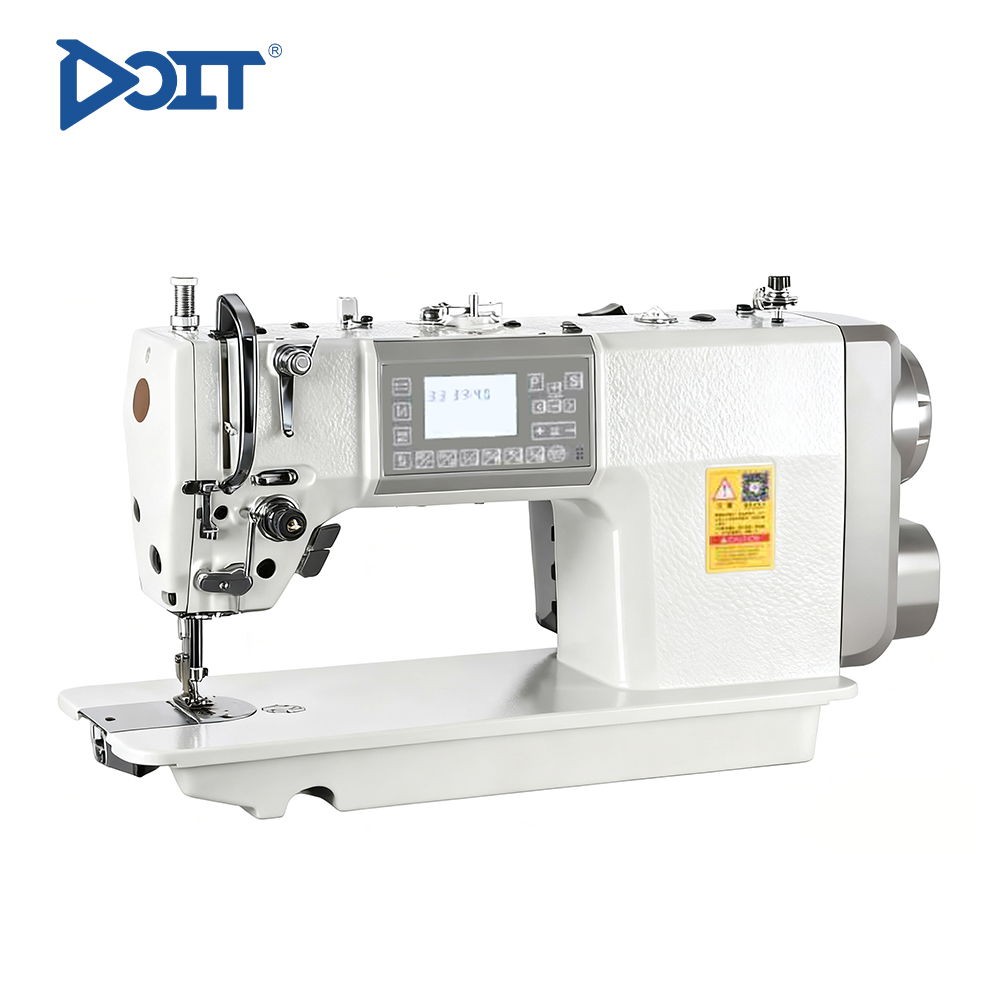
DT 8800-D4 |
Direct-drive full-automatic lockstitch |
Direct-drive servo motor, automatic thread trimming, auto backtack, touch-screen control |
|
DT C10-D4 |
Computerized lockstitch with stepper control |
Digital control of stitch parameters; stepper-driven functions reduce the mechanical linkages that need adjustment |
|
DT 940-4AT |
High-speed automatic overlock |
Sews, trims and finishes in one pass; up to 7,000 spm |
All DOIT machines carry a one-year warranty on machine parts and a two-year warranty on the motor, with parts availability committed for the service life of the model — worth confirming in writing, because the part that ends a machine’s life is usually the one nobody stocks.
10. The Bottom Line
- The bobbin case is the most overlooked component in daily maintenance and one of the most frequent sources of thread breakage and skipped stitches.
- Clean before you adjust. Lint under the tension spring changes tension without the screw moving.
- A scratch on the thread path means a new case, not a polished one.
- The drop test is a sanity check, not a calibration. Use a gauge if you need a number, and set the final value on your own fabric.
- Start every skipped-stitch investigation with a fresh needle, then work down the list.
- Keep each bobbin case with its own machine.
- Switch the power off before you put a hand in the hook area.
The cost of a bobbin case is trivial. The cost of a line stopped for thread breakage, or a hook damaged by a case run past its life, is not.
Explore the range: denimsewing.com Email: sales6@chinadoit.cn
References
- Juki LU-2800 Series and PLC-2700 Series Engineer’s Manuals; Juki LH-2178 Instruction Manual — needle bar rise from lowest position (2.0 mm / 2.3 mm), hook blade point to needle clearance (0.05–0.1 mm; 0.01–0.05 mm), hook needle guard deflection (0.05–0.2 mm), bobbin case opener clearance (0.6–0.7 mm), and the requirement to switch power off before adjustment.
- Melco XT Technical Manual, Critical Measurements — Bobbin Tension — bobbin tension range and drop test procedure.
- Towa-style tension gauge practice — bobbin tension read in gram-force; 200–300 mN ≈ 20–30 gf.
- Juki troubleshooting guidance on scratched thread-contacting parts and bobbin thread tension.
- Needle replacement intervals (6–8 hours general use; 4–6 hours on denim, canvas and leather) and bobbin loading direction for vertical-axis hook lockstitch machines.
- ISO 9001:2015 — quality management system standard (a management system certification, not a product compliance mark).