


Industrial Sewing Machine Manufacturer Qualification Audit: ISO Certification, Production Capacity & R&D Capability Evaluation System
Industrial Sewing Machine Manufacturer Qualification Audit: ISO Certification, Production Capacity & R&D Capability Evaluation System
For garment factory owners and procurement professionals, selecting a sewing machine manufacturer is one of the most critical decisions you will make. The wrong supplier can mean inconsistent quality, delayed deliveries, unavailable spare parts, and production stoppages that cost far more than the machines themselves. This guide provides a comprehensive framework for evaluating industrial sewing machine manufacturers—covering ISO certification standards, production capacity assessment, R&D capability evaluation, supplier grading systems, and key contract clauses to protect your investment.
1. Why Is Manufacturer Qualification Audit Essential Before Purchase?
A manufacturer qualification audit is a structured evaluation of a supplier's manufacturing facility, processes, workforce, documentation, and compliance systems. It determines whether the supplier is legitimate, has adequate business licenses and experience, and can produce the intended product to required quality standards.
Why it matters for garment factories:
-
Risk mitigation: Identifies quality inconsistency, delayed shipments, or communication breakdowns before they become problems
-
Quality assurance: Verifies that the manufacturer can deliver consistent quality over time
-
Long-term partnership: Evaluates technical capability, operational reliability, and post-sale support readiness
The cost of skipping qualification: A factory that purchases 50 machines from an unvetted supplier may save 10–15% upfront but face 30–50% higher downtime costs over five years due to parts unavailability, inconsistent quality, and poor support.
2. What ISO Certifications Should a Sewing Machine Manufacturer Hold?
ISO certifications are the foundational quality assurance standard for industrial sewing machine manufacturers.
ISO 9001:2015 (Quality Management System) — This is the most widely used ISO certification in the manufacturing sector. It ensures organizations consistently meet customer and regulatory requirements. For sewing machine manufacturers, ISO 9001 certification indicates a structured quality management system with documented processes, inspection reports, staff training records, and corrective action procedures.
Industry examples:
-
JUKI Corporation's Ohtawara Plant acquired ISO9001 certification in 2003
-
Bernina holds ISO 9001:2015 certification as a developer and manufacturer of sewing and embroidery machines
-
Dürkopp Adler has maintained ISO 9001 certification since 1996
Safety and compliance certifications: For electrical safety and market compliance, look for CE marking (Europe), UL certification (North America), or CCC certification (China). These indicate adherence to electrical safety norms in regulated markets.
What to verify:
-
Certificate validity (most ISO 9001 certificates are valid for 3 years with periodic surveillance audits)
-
Scope of certification (design, manufacture, and service of specific machine types)
-
Issuing body (TÜV Rheinland, SQS, or other recognized certification bodies)
3. How Do You Assess a Manufacturer's Production Capacity?
Production capacity assessment evaluates whether the manufacturer can meet your volume requirements and maintain consistent quality at scale.
Key assessment criteria:
| Assessment Area | What to Check | Red Flags |
|---|---|---|
| Facility size and equipment | Factory floor area, number of production lines, CNC machining centers, assembly stations | Outdated equipment, insufficient floor space for current orders |
| Workforce | Number of employees, skilled technicians, quality control staff | High turnover, insufficient trained operators |
| Annual output | Maximum production capacity (units/year), current utilization rate | Capacity cannot meet your peak demand |
| Quality control infrastructure | In-house lab, measuring and testing equipment, inspection protocols for incoming, in-process, and final goods | No documented QC procedures |
| Supply chain integration | Access to component suppliers (motors, needle bars, electronic controls) | Long lead times for critical components |
Practical assessment methods:
-
On-site factory audits: A typical supplier audit lasts between two and five days and examines over 400 unique checkpoints across quality standards, safety protocols, environmental compliance, and labor practices
-
Virtual factory tours: For remote assessment, request video walkthroughs of production lines and quality control stations
-
Third-party audits: Engage independent inspection companies to verify supplier claims
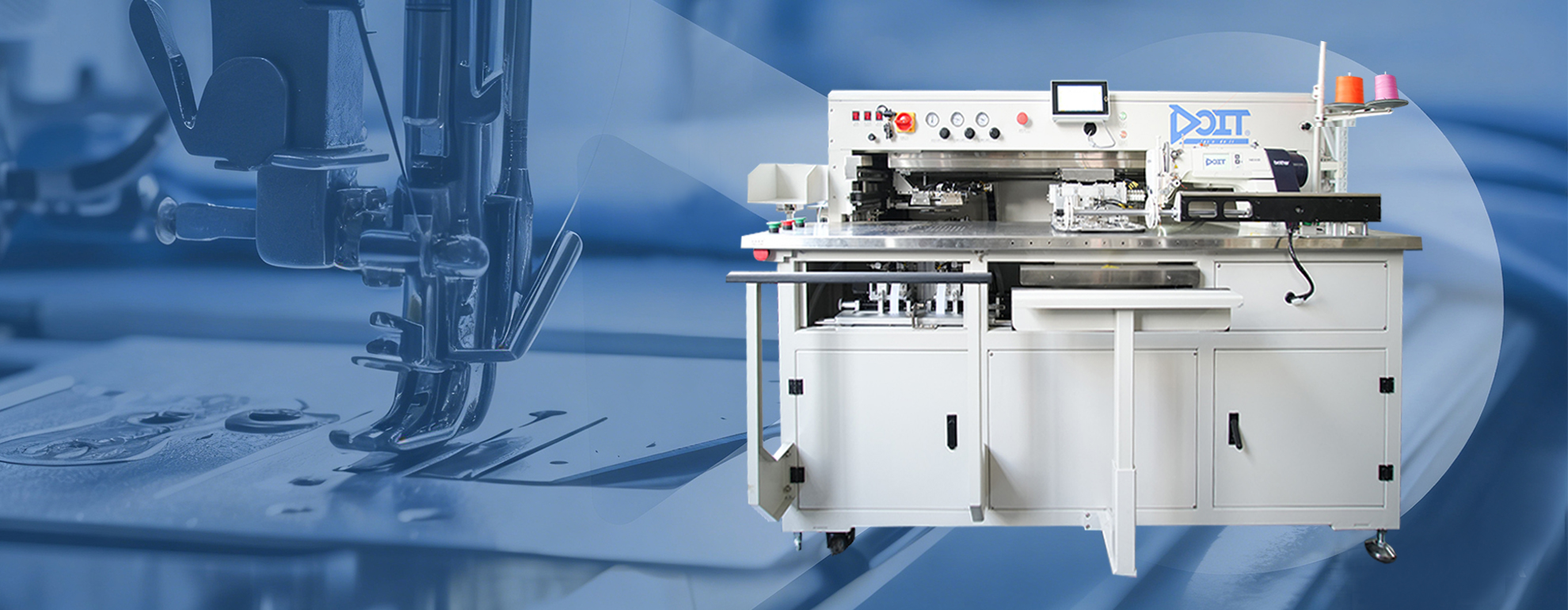
DOIT Group, based in Taizhou, Zhejiang—China's industrial sewing machine hub—benefits from the region's mature supply chain ecosystem of servo motor, needle bar, and electronic control system manufacturers, ensuring consistent production capacity and parts availability.
4. What R&D Capabilities Should You Evaluate?
R&D capability determines a manufacturer's ability to innovate, improve product quality, and respond to changing production requirements.
Key R&D indicators:
Engineering team: Number of engineers, their qualifications, and years of experience in sewing machine design. Manufacturers with dedicated R&D departments can customize machines for specific applications and develop new features.
Technology adoption: Does the manufacturer use CAD/CAM systems for design? Do they have CNC machining centers for precision component manufacturing? Advanced manufacturing technology indicates engineering rigor and quality commitment.
Product development track record: How frequently does the manufacturer release new models? Have they introduced meaningful innovations (e.g., direct-drive servo motors, stepper motor control, automatic thread trimming)?
Customization capability: Can the manufacturer modify machines for your specific production needs—voltage adaptation (110V/220V), OEM branding, specialized attachments?
Quality improvement processes: Does the manufacturer use problem-solving methods like 8D and 5 Whys to address quality issues? Do they maintain technical documentation and implement continuous improvement programs?
Certification and standards compliance: Some manufacturers hold additional certifications like the "Zhejiang Made" quality certification, which规定了工业缝纫机用伺服电机及控制系统产品认证的要求和程序.
DOIT Group emphasizes strict quality control for every machine, with stable performance, reliable quality, and one-stop professional service to fully support your business.
5. What Is a Supplier Grading System and How Does It Work?
A supplier grading system categorizes manufacturers based on their performance across multiple dimensions, enabling data-driven procurement decisions.
Typical grading framework:
| Grade | Score Range | Description | Procurement Action |
|---|---|---|---|
| A (Preferred) | 90–100 | Exceptional performance across all criteria | Strategic partnership, volume orders |
| B (Approved) | 75–89 | Meets all requirements, minor improvement areas | Standard orders with regular review |
| C (Conditional) | 60–74 | Significant gaps requiring correction | Limited orders with corrective action plan |
| D (Unapproved) | Below 60 | Fails to meet minimum standards | Do not use |
Grading criteria (weighted scoring):
| Category | Weight | Key Metrics |
|---|---|---|
| Quality Systems | 30% | ISO certification, QC procedures, defect rates, inspection records |
| Production Capacity | 25% | Facility size, workforce, annual output, on-time delivery rate |
| Technical Capability | 20% | R&D team, technology adoption, customization ability |
| After-Sales Support | 15% | Warranty terms, parts availability, response time, technical support |
| Financial Stability | 10% | Business license verification, financial records, payment terms |
Minimum rating thresholds: Some procurement frameworks require specific minimum scores—for example, manufacturing facility ratings of 19 out of 25 and testing facility ratings of 7 out of 10.
6. What Key Contract Clauses Should You Negotiate?
Contract terms protect your investment and ensure ongoing support. Based on industry best practices, here are critical clauses to include:
| Clause | What to Include | Why It Matters |
|---|---|---|
| Warranty terms | Minimum 12 months on parts, 24 months on motor | Covers defects and premature failures |
| Parts availability commitment | Guaranteed parts availability for 5–10 years | Prevents obsolescence |
| Lead time guarantees | Maximum delivery time, penalties for delays | Ensures production continuity |
| Quality acceptance criteria | Stitch quality standards, defect rate thresholds, inspection procedures | Provides clear quality expectations |
| Technical support | On-site support availability, response time commitments, remote diagnostics | Minimizes downtime |
| Training provision | Operator training, maintenance training, documentation | Ensures proper machine operation |
| Intellectual property | Ownership of custom designs, confidentiality agreements | Protects your proprietary specifications |
| Termination conditions | Clear grounds for contract termination, transition support | Provides exit strategy |
Warranty as a quality indicator: DOIT Group offers a 2-year warranty on machines and lifetime after-sales support, with an expert technical team ready to offer global on-site support when needed. This level of commitment signals confidence in product quality and long-term partnership orientation.
7. What Should a Supplier Audit Checklist Include?
A comprehensive audit checklist covers multiple dimensions of supplier capability. Use this checklist when evaluating potential manufacturers:
Legal and Business Documentation:
-
Business license verification and legal status
-
Tax registration and financial records
-
Export licenses and customs compliance
-
Insurance coverage
Facility and Infrastructure:
-
Factory size and layout
-
Production equipment inventory and condition
-
Maintenance records and calibration certificates
-
Safety and environmental compliance
Quality Management System:
-
ISO 9001 or equivalent certification
-
Quality control procedures and inspection records
-
Non-conformance reporting and corrective action processes
-
Traceability systems for components and finished machines
Production Capacity:
-
Workforce size and skill levels
-
Maximum and current production capacity
-
Lead times for standard and custom orders
-
Supply chain and component sourcing
Technical Capability:
-
Engineering team qualifications
-
CAD/CAM and design capabilities
-
Customization and modification ability
-
Technology roadmap and innovation track record
After-Sales Support:
-
Parts inventory and availability
-
Technical support response time
-
Warranty terms and claims process
-
Training and documentation provided
8. How Do You Verify a Manufacturer's Claims?
Beyond reviewing documentation, take these verification steps:
Request third-party audit reports. Independent audits provide objective assessment of factory capabilities. Look for reports from recognized inspection companies like TÜV Rheinland, SGS, or Bureau Veritas.
Conduct virtual or on-site factory tours. For high-volume contracts, on-site visits are essential to verify motor winding processes, PCB integration, and assembly quality. Virtual tours can serve as an initial screening tool.
Request sample machines for testing. Run your actual materials and fabric stacks through sample machines. Factory production reveals performance that no spec sheet can predict. Test stitch quality at maximum speed, check vibration levels, and evaluate ease of maintenance.
Check customer references. Contact existing customers, particularly those with similar production volumes and fabric types. Ask about reliability, parts availability, and support responsiveness.
Verify certifications online. Cross-check ISO certificates on certifying body websites (e.g., certipedia.com for TÜV Rheinland certificates).
Review complaint history. Ask about past quality issues and how they were resolved. A manufacturer's response to problems reveals more than their marketing materials.
9. What Are the Red Flags When Evaluating a Manufacturer?
Watch for these warning signs during qualification:
| Red Flag | What It Indicates |
|---|---|
| No ISO certification or expired certification | Lack of structured quality management |
| Cannot provide third-party audit reports | May be hiding deficiencies |
| Unwilling to allow factory visit | Potential issues with facilities or operations |
| Vague warranty terms or no written warranty | May not stand behind products |
| No spare parts inventory | Long downtime when repairs are needed |
| Response time >24 hours | Inadequate customer support infrastructure |
| On-time delivery rate <90% | Supply chain or production planning weaknesses |
| No technical documentation available | Lack of engineering rigor |
| Pressure to pay 100% upfront | Financial instability or trust issues |
10. What Does DOIT Group Offer in Terms of Qualification?
DOIT Group is a professional industrial sewing machine manufacturer that meets the key qualification criteria outlined in this guide.
Certifications and quality: DOIT operates under strict quality control for every machine, ensuring stable performance and reliable quality. While specific ISO certification details should be verified directly, the company's commitment to quality is evidenced by its 2-year warranty and lifetime after-sales support.
Production capacity: Based in Taizhou, Zhejiang—China's industrial sewing machine hub—DOIT benefits from a mature supply chain ecosystem of component manufacturers, ensuring consistent production capacity and parts availability.
Technical support: DOIT's expert technical team is ready to offer global on-site support when needed. This commitment to responsive support is a key indicator of a reliable supplier.
Service model: DOIT provides one-stop professional service to fully support your business—from equipment selection and installation to operator training and after-sales maintenance.
The Bottom Line
A manufacturer qualification audit is not a one-time exercise—it is an ongoing process that protects your production line and your bottom line. By systematically evaluating ISO certification, production capacity, R&D capability, and after-sales support, you can identify suppliers that will deliver consistent quality, reliable parts availability, and responsive service for years to come.
Key takeaways:
-
Start with ISO 9001 certification as the baseline quality standard
-
Conduct on-site or virtual factory audits to verify claims
-
Evaluate production capacity against your volume requirements
-
Assess R&D capability for customization and future upgrades
-
Use a supplier grading system for data-driven decisions
-
Negotiate strong contract clauses including warranty, parts availability, and support commitments
-
Watch for red flags like vague warranties or unwillingness to allow factory visits
The right manufacturer is not just a supplier—they are a strategic partner in your production success.
Ready to evaluate DOIT Group as your industrial sewing machine partner? Explore the full range at denimsewing.com.
📩 Email: sales6@chinadoit.cn
🌐 Website: denimsewing.com